.jpg)

At YouLend, we build the infrastructure that powers flexible financing for businesses worldwide. We help technology companies, payment platforms, marketplaces and ecommerce providers offer seamless financing to the small and medium-sized businesses they serve.
As YouLend’s engineering organisation grew, a question emerged: how do we make sure the platform delivers real, measurable value to the people using it every day?
The answer was to treat the platform like any other product – with a roadmap, feedback loops, clear ownership, and outcomes tied to business impact.
Rather than changing what the platform delivered, we focused on changing how decisions were made – from how work was prioritised, to how success was defined, to how closely the team worked with its users.
This post explores how we made the transition from technical function into a product-driven organisation – and what changed as a result.
Turning the Platform into a Product
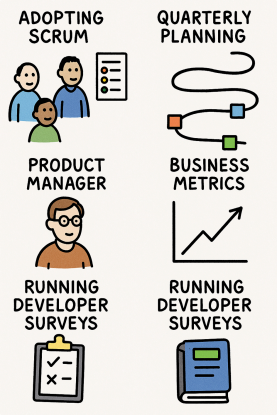
Turning the platform into a product introduced clearer structure around priorities, ownership and outcomes for the developers building and running YouLend’s products.
Before this shift, it was tempting to prioritise work based on what seemed technically interesting or “nice to have”.
Treating the platform as a product forced us to think differently: what problems are developers actually facing, and which changes have the biggest impact on their day-to-day work?
This involved introducing product management principles across the platform function – defining priorities, measuring success through business and developer impact, and ensuring that every initiative had a clear purpose.
It also meant talking to developers more. Instead of guessing what teams needed, we actively asked, through surveys, direct conversations and tighter collaboration with Product Engineering.
Why we adopted Scrum
First came the need for structure, then came Scrum: an iterative, sprint-based project management structure.
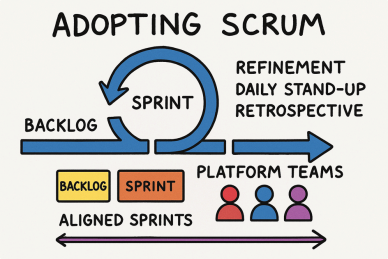
Before adopting Scrum, each platform team worked slightly differently. Some teams followed elements of Scrum, others used the Kanban method, and some relied on informal planning – there was no shared rhythm, consistent roadmap or visibility across teams.
That made coordination difficult, especially when multiple teams were involved in the same initiative.
By adopting Scrum across all platform teams, we created a common way of working, shared expectations across the organisation, and a more predictable delivery cadence.
One of the most impactful changes was aligning all three Platform teams to start and finish sprints on the same day.
This simple shift made cross-team planning significantly easier – dependencies were clearer, timelines aligned, and collaboration improved.
It has also helped the wider organisation. When teams request work, they now understand how it fits into a sprint, rather than expecting immediate delivery. That shared language and rhythm have helped balance expectations across the business.
Quarterly Planning & Roadmaps
To stay aligned with business priorities, we introduced a structured quarterly planning cycle.
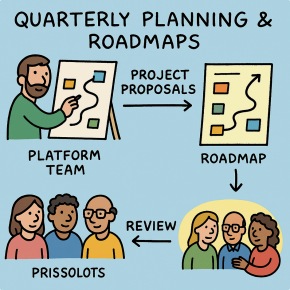
A roadmap gives the platform directions, focus and accountability. It enables the team to be proactive rather than reactive, prioritising the work that will have the biggest impact while pushing back on distractions.
Crucially, the roadmap is transparent: it’s shared across the organisation, offering Product Engineering, leadership and other stakeholders visibility into what the platform is working on, and why.
This transparency has helped close communication gaps. Platform work is now visible across the company, with clear opportunities for discussion and input from other teams.
The Role of the Product Manager
Every great product team needs someone focused on prioritisation, planning and business impact.
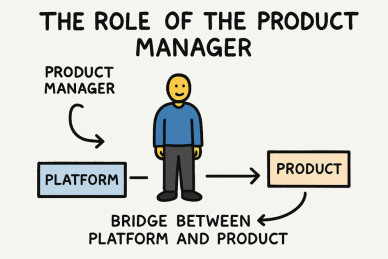
Introducing this role was instrumental in shaping how the platform operates.
The product manager:
- Helps prioritise platform work based on business value as well as technical merit
- Works closely with product managers in Product Engineering, which improves alignment and visibility
- Translates business needs into platform initiatives
- Brings structure and discipline to planning and roadmap discussions
Platform engineers naturally prioritise technical wins, but not every technical improvement delivers business value; the product manager helps bridge the gap between platform and product, highlighting where platform work supports future business growth, partnerships and customer outcomes.
Running Developer Surveys
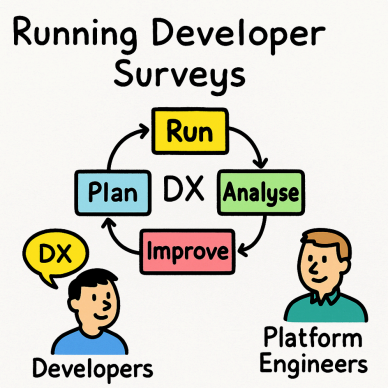
Another key part of treating the platform as a product is actively listening to our users.
At YouLend, we run Developer Experience (DX) surveys every four months, to gather feedback on:
- Local development experience
- Deployment pipelines
- Testing workflows
- Friction points in day-to-day work
These surveys help us identify issues before they become blockers. When patterns emerge, we follow up directly with developers to understand root causes and design solutions together.
One example is YouLend’s internal development tooling, which was created as a result of feedback highlighting slow and frustrating local workflows. Rather than being an exercise in data collection, the surveys shape the platform roadmap and ensure updates reflect real developer needs.
Business Metrics
The work of platform teams often goes unnoticed – until something breaks.
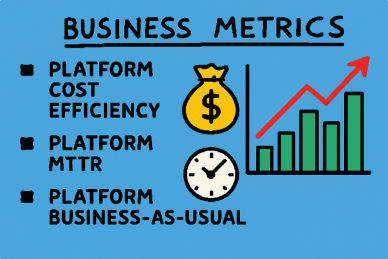
Treating the platform as a product means making its impact visible and measurable. At YouLend we measure our impact according to a set of core metrics aligned to our mission:
“To provide a stable, secure, and cost-efficient platform that enables YouLend to ship innovative features fast, while supporting the scale and expectations of the world’s leading payment and technology companies.”
These include:
- Platform Cost Efficiency
- Mean Time to Recovery (MTTR)
- Ongoing “business-as-usual” indicators, such as developer enablement, platform stability and security
Not every improvement can be measured in isolation, but together these metrics paint a clear picture of YouLend’s resilience and efficiency.
Key learnings
If we learned one thing from turning the platform into a product, it was to get closer to the business.
The shift improved:
- Visibility into platform work
- Trust across teams
- Alignment between technology and business outcomes
Platform Engineering moved from being a background function to an active partner in product delivery, with clearer ownership, stronger feedback loops, and shared priorities.
Conclusion
Turning the Platform into a product gave the team focus and purpose. It transformed how we plan, communicate, and measure success. With shared sprints, structured roadmaps, and developer-driven feedback, Platform Engineering became a visible, predictable and trusted part of YouLend’s product ecosystem.
But this evolution doesn’t stop with developers – as AI and vibe-coding change who can build, the platform’s role will expand again.
.png)




.png)


